
What Makes Defensive Ammo Reliable? Inside the Load Design Process
Not all defensive ammo is created equal. Learn what makes self-defense ammunition reliable, from primers to pressure curves and real-world testing.
David Wilhite
2/24/20263 min read
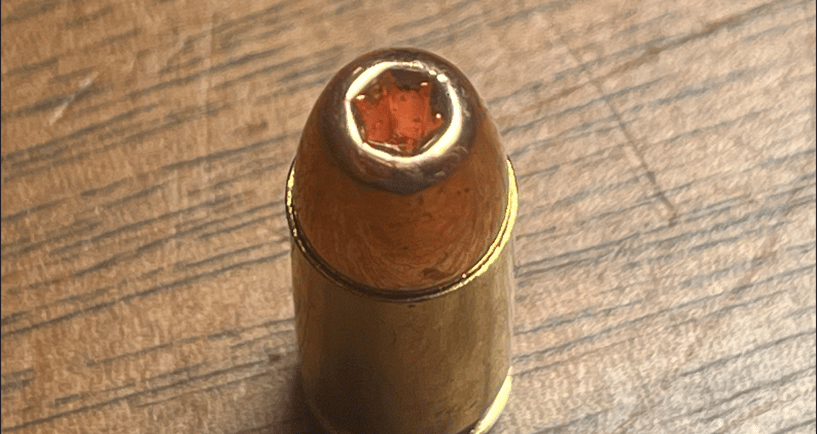
What Makes Defensive Ammo Reliable? Inside the Load Design Process
When it comes to defensive ammunition, reliability isn’t a feature — it’s the foundation.
Accuracy matters. Expansion matters. Penetration matters.
But none of it matters if the round doesn’t fire… or doesn’t cycle… or doesn’t perform as intended.
The uncomfortable truth is that not all defensive ammo is built to the same standard. Some loads are optimized for marketing velocity numbers. Others are built to meet a price point.
Reliable defensive ammo is built differently.
At Rocky Ford Ammunition, reliability is engineered into every step of the process. Here’s what that actually means.
🔒 Reliability Starts With Ignition
Every round begins with the primer.
A defensive cartridge must fire every time — under stress, in varying temperatures, and from real-world carry conditions.
What Affects Reliable Ignition?
Proper primer seating depth
Consistent primer quality
Uniform case preparation
Clean primer pockets
Improperly seated primers can cause:
Light strikes
Failure to fire
Inconsistent ignition
Quality defensive ammo ensures primers are seated correctly and uniformly to reduce that risk.
⚙️ Powder Selection & Pressure Curve Matter More Than Velocity
Many shooters focus on muzzle velocity.
But in defensive ammo, the pressure curve is more important than raw speed.
The pressure curve determines:
How smoothly the firearm cycles
Recoil impulse
Consistency from shot to shot
Stress on components
A well-designed defensive load:
Generates sufficient pressure for reliable cycling
Avoids excessive peak pressure
Maintains consistent burn characteristics
Inconsistent powder charges or poor burn rate selection are major causes of reliability issues.
Reliable defensive ammo prioritizes controlled performance over flashy numbers.
🎯 Bullet Design: Expansion Must Be Predictable
A hollow point that fails to expand acts like ball ammo.
Expansion reliability depends on:
Bullet cavity design
Jacket thickness
Velocity window
Consistency of impact speed
Short-barreled pistols complicate this further. Reduced barrel length means lower velocity, which can prevent some bullets from expanding as designed.
Quality defensive ammo accounts for:
Realistic barrel lengths
Practical engagement distances
Consistent expansion thresholds
Reliable defensive ammunition performs as intended — not just under ideal lab conditions.
🔄 Feeding & Cycling Reliability
A defensive round must:
Feed smoothly from the magazine
Chamber without resistance
Extract cleanly
Eject consistently
This depends on:
Overall cartridge length (OAL)
Case crimp
Bullet profile
Consistent case dimensions
Improper crimping can cause:
Bullet setback
Pressure spikes
Feeding issues
Reliable defensive ammo is assembled with dimensional consistency in mind.
🧪 Consistency Between Rounds
Reliability isn’t about one perfect round.
It’s about round #1 performing the same as round #200.
Consistency requires:
Tight powder charge tolerances
Uniform bullet seating depth
Batch tracking
Quality control checks
Lot-to-lot variation is common in mass production. Smaller, controlled batches often allow for greater uniformity.
🌡️ Environmental Reliability
Defensive ammo must function in:
Cold temperatures
Hot environments
Humidity
Extended carry conditions
Temperature changes affect:
Powder burn rate
Pressure
Velocity
Reliable defensive ammo is designed to maintain performance across realistic environmental conditions — not just indoor test ranges.
🏠 Real-World Reliability Testing
Defensive ammo should be tested for:
Cycling in semi-autos
Expansion in realistic media
Velocity consistency
Suppressed and unsuppressed use (if applicable)
A responsible shooter should also test their chosen defensive load in their personal firearm.
Best practice:
Fire at least 50 rounds
Confirm point of impact
Confirm reliable cycling
Confidence comes from verification.
🚫 Common Causes of Defensive Ammo Failure
Even quality firearms can struggle with poorly built ammo.
Frequent causes include:
Underpowered loads
Inconsistent powder charges
Poor crimp
Low-quality brass
Inadequate bullet design
Cutting corners during manufacturing increases risk — especially in defensive rounds.
🧠 Why Price Isn’t the Only Metric
Defensive ammo costs more than range ammo for a reason.
You’re paying for:
Advanced bullet design
Quality control
Consistency
Performance testing
Reliable components
Saving a few dollars per box makes little sense when the stakes are high.
🔇 What About Subsonic Defensive Ammo?
Subsonic defensive ammo adds complexity:
Must remain below sonic threshold
Must expand at lower velocities
Must cycle reliably
Many standard hollow points fail to expand at subsonic speeds.
Properly designed subsonic defensive loads require:
Purpose-built bullets
Carefully tuned velocity windows
Reliable pressure curves
🏆 How Rocky Ford Ammunition Prioritizes Reliability
At Rocky Ford Ammunition, reliability isn’t assumed — it’s built intentionally.
We focus on:
Controlled batch loading
Purpose-driven bullet selection
Consistent powder measurement
Proper primer seating
Reliable crimping
Real-world performance standards
Our philosophy is simple:
Defensive ammo should perform predictably, not hopefully.
When reliability is engineered into the process, confidence follows.
Conclusion
Reliable defensive ammo isn’t defined by branding or velocity numbers. It’s defined by consistent ignition, predictable expansion, reliable cycling, and uniform construction.
When choosing self-defense ammunition, prioritize:
Quality components
Consistent loading
Proven bullet design
Real-world testing
Because in defensive situations, reliability isn’t optional — it’s everything.
Rocky Ford Ammunition builds defensive rounds with that standard in mind.