
The Science of Recoil Impulse: Why Two 130 Power Factor Loads Can Feel Completely Different
Two 9mm loads can make identical power factor yet feel completely different. Learn the science behind recoil impulse, slide velocity, and sight tracking from the perspective of competitive shooters.
David Wilhite
7/12/20263 min read

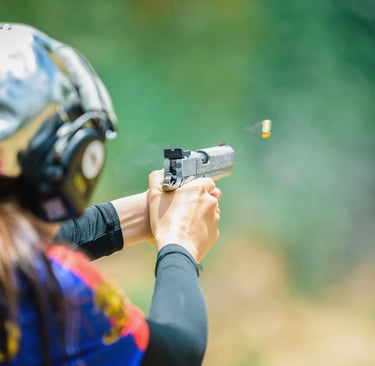
Every USPSA Shooter Has Experienced It
Imagine two boxes of match ammunition. Both chronograph at 130 Power Factor. Both are loaded with premium components. Both are legal for USPSA Minor. Yet one feels like a quick snap that drives the sights high before they settle back into the A-zone.
The other feels like a smooth push that keeps the dot visible throughout the recoil cycle. If the power factor is identical, how can they feel so different? The answer lies in one of the most misunderstood concepts in competitive shooting:
Recoil impulse.
Understanding recoil impulse won't magically make you a Grand Master. But it will help you understand why experienced competitors spend so much time testing ammunition instead of simply buying whatever is cheapest.
Power Factor Measures Momentum—Not Feel
Power factor is an excellent way for match officials to classify ammunition. Though it is not a complete measurement of recoil.
Power factor is calculated by multiplying bullet weight by velocity and dividing by 1,000. A 124-grain bullet traveling around 1,050 fps and a 147-grain bullet traveling around 885 fps both comfortably qualify for Minor.
On paper, they're almost identical, but inside the gun, they're not.
Power factor tells us the bullet's momentum. It doesn't describe how quickly that momentum is delivered to the firearm. That timing is what your hands, wrists, and eyes experience.
Recoil Is a Time Event
Many shooters picture recoil as a single force, but in reality, recoil unfolds over a very short period of time. As the powder burns, pressure builds behind the bullet. The bullet accelerates down the barrel.
The slide begins moving. The recoil spring compresses. The slide reaches full travel. The spring pushes the slide forward again. The sights return. Every one of these events happens in milliseconds.
Changing the ammunition changes that sequence. Not dramatically, but enough that skilled shooters notice.
Why Bullet Weight Changes Perception
Heavier bullets generally travel more slowly. Lighter bullets generally travel faster. Even when both produce the same power factor, they don't spend the same amount of time accelerating through the barrel.
That subtle difference changes how momentum is transferred into the pistol. Many competitors describe lighter bullets as having a sharper recoil pulse. Heavier bullets often produce a longer, smoother impulse.
Neither is automatically faster. The important question is:
Which one allows you to see the sights sooner?
Your Eyes Win Matches
Elite USPSA shooters don't fire based on recoil. They fire based on visual confirmation. The trigger breaks when the sights have returned to an acceptable picture.
Anything that helps you maintain visual information throughout recoil can shorten split times. This is why so many Carry Optics shooters evaluate ammunition by watching the dot instead of simply judging recoil by feel.
The timer measures speed, but your eyes determine when speed is possible.
Why Consistency Matters More Than Softness
One of the biggest misconceptions in competition shooting is that the softest ammunition is automatically the fastest. Not necessarily.
An inconsistent load that feels soft but tracks differently from shot to shot can actually slow a competitor down.
Experienced shooters often prefer a slightly firmer load if it behaves the same way every single shot. Consistency creates confidence, and confidence creates speed.
The Complete System
Competitive performance isn't created by ammunition alone. Nor is it created by the pistol alone. It comes from the interaction between:
Ammunition
Bullet weight
Powder characteristics
Recoil spring
Slide mass
Grip technique
Optic tracking
Shooter vision
The best competitors tune the entire system, not just one component.
What Rocky Ford Focuses On
At Rocky Ford Ammunition, we don't chase impressive numbers for the side of the box.
We focus on ammunition that produces repeatable recoil characteristics, consistent velocity, and dependable performance under match conditions. Because the goal isn't simply making power factor. It's helping competitors trust what they see when the timer starts.
Final Thoughts
When two loads share the same power factor, they may satisfy the rulebook equally. But they won't necessarily perform equally in your hands.
The best competition ammunition isn't defined by velocity alone. It's defined by how predictably it lets you run your pistol.
In USPSA, hundredths of a second matter, and those hundredths begin with what happens the instant the cartridge ignites.