
Pressure Curves Explained: The Hidden Science Behind Match-Grade 9mm Performance
Velocity tells you how fast a bullet leaves the barrel. Pressure curves explain how it got there. Learn why pressure behavior influences recoil impulse, slide timing, and consistency in USPSA and IDPA competition.
David Wilhite
7/24/20263 min read
Everyone Talks About Velocity. Few Talk About Pressure.
Walk down the ammunition aisle or browse almost any manufacturer's website and you'll see the same specifications:
Bullet weight
Muzzle velocity
Muzzle energy
Those numbers matter. But they don't tell the whole story.
Two 9mm loads can launch the same bullet at nearly identical velocities and still feel completely different when the timer starts.
Why?
Because velocity is only the result.
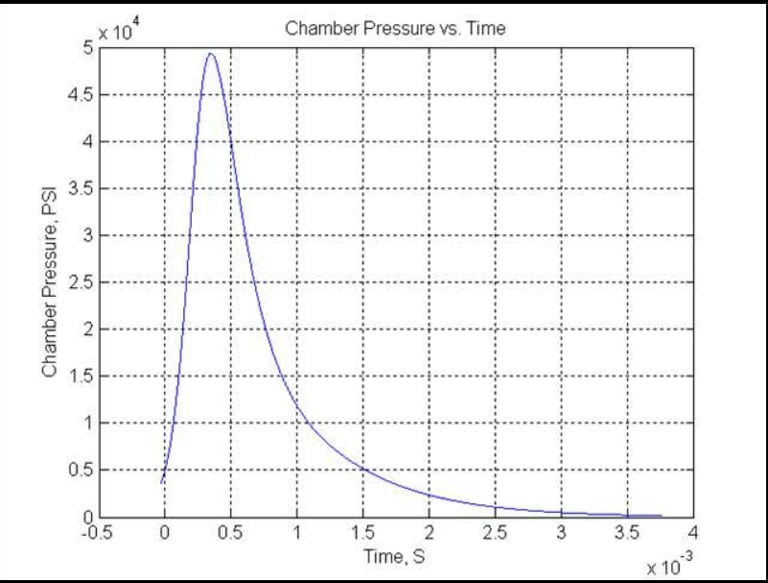
The real story happens milliseconds earlier, inside the chamber, as pressure builds, peaks, and falls. That's the pressure curve, and it's one of the most important concepts in competitive handgun ammunition.
What Is a Pressure Curve?
When the primer ignites the powder charge, the powder doesn't explode all at once. It burns progressively, creating high-pressure gas that accelerates the bullet down the barrel. As this happens, chamber pressure rises to a peak and then decreases as the bullet moves forward and barrel volume increases.
If you plotted that pressure over time, you'd see a curve rather than a single spike. That curve describes how energy is delivered, not just how much energy is produced. For competitors, that distinction matters.
Same Velocity. Different Feel.
Imagine two competition loads. Both fire a 147-grain bullet. Both average 130 Minor Power Factor. Both are reliable. Yet one load produces a sharp, abrupt recoil pulse. The other produces a smoother, more controlled recoil impulse.
The difference isn't necessarily velocity. It's often the way pressure was generated and delivered during the firing cycle. That's why experienced shooters judge ammunition by what they see through the sights, not just by what the box says.
Pressure Curves Influence the Entire Shooting Cycle
A pistol doesn't simply fire a bullet. It performs a sequence of precisely timed mechanical events.
As pressure builds:
The bullet accelerates.
The barrel and slide begin moving together.
The slide unlocks at the designed point in the cycle.
The recoil spring compresses.
The slide returns to battery.
The sights settle back onto the target.
Ammunition influences this entire process. Consistent ammunition helps the pistol behave consistently. That predictability is what competitors are really chasing.
Why Match Shooters Care About Consistency
Elite competitors rarely describe a good load as "powerful."
Instead, you'll hear words like:
Flat
Predictable
Repeatable
Trackable
Those aren't marketing buzzwords. They're descriptions of consistency.
When recoil impulse behaves the same way every shot, the shooter spends less mental effort reacting to the gun and more attention processing visual information.
That's one reason carefully assembled match ammunition can feel different from high-volume range ammunition, even when both meet the same power factor.
Pressure Isn't the Enemy
There's a common misconception that lower pressure automatically means better ammunition. That's not how internal ballistics works.
Every cartridge must generate sufficient pressure to:
Propel the bullet at the intended velocity.
Cycle the firearm reliably.
Operate consistently across environmental conditions.
The objective isn't the lowest possible pressure. It's producing the intended performance in a controlled and repeatable way.
The Science Supports the Skill
No ammunition can replace fundamentals. Grip, vision, movement, and trigger control remain the biggest determinants of match performance. But quality ammunition removes unnecessary variables.
When competitors trust their ammunition to behave consistently, they're free to focus on execution rather than wondering what the next shot will feel like. At the highest levels of competition, confidence often comes from eliminating uncertainty.
How Rocky Ford Approaches Match Ammunition
At Rocky Ford Ammunition, we don't evaluate a load by a single number on the box. We look at the entire performance system.
Every competition load is developed with attention to:
Consistent velocity
Predictable recoil impulse
Reliable cycling
Stable power factor
Repeatable performance across extended strings of fire
Because serious competitors don't need surprises. They need ammunition that behaves the same way every time the buzzer sounds.
Final Thoughts
Velocity is easy to advertise. Pressure curves are harder to explain. But they're a big part of why one competition load feels smooth while another feels abrupt, even when the chronograph reports nearly identical numbers.
Competitive shooters don't win by chasing the highest velocity. They win by building a complete system where firearm, ammunition, and shooter work together predictably.
That's the science behind match-grade ammunition. And that's where consistency becomes a competitive advantage.
The Rocky Ford Test
When evaluating a new lot of match ammunition, don't stop at the chronograph.
Ask yourself:
Did every round cycle the pistol reliably?
Did the sights or dot return predictably?
Did recoil feel consistent through an entire stage?
Did the ammunition comfortably make power factor?
Would you trust this exact lot at a Level II or Level III match?
If the answer is yes, you've found more than a load.
You've found confidence.