
How to Tune 9mm Ammo for Minor Power Factor (Without Risking a Chrono Failure)
Learn how competitive shooters tune 9mm ammunition to safely meet Minor Power Factor in USPSA and IDPA competition. Avoid chrono failures while maintaining low recoil and consistent performance.
David Wilhite
4/7/20263 min read
How to Tune 9mm Ammo for Minor Power Factor (Without Risking a Chrono Failure)
For competitive pistol shooters, few moments are more stressful than stepping up to the chronograph station at a major match.
Everything about your performance — sometimes even your stage scores — depends on one number:
Power Factor.
If your ammunition fails to meet the required threshold, your match can quickly go sideways.
That’s why experienced competitors tune their ammunition carefully to ensure it meets Minor Power Factor while still delivering the lowest possible recoil impulse.
Let’s break down how serious competitors approach this balancing act.
Understanding Minor Power Factor
Most 9mm shooters competing in organizations like United States Practical Shooting Association and International Defensive Pistol Association compete in Minor Power Factor divisions.
Power Factor is calculated with a simple formula:
Bullet Weight × Velocity ÷ 1000
For Minor classification, the required threshold is typically:
125 Power Factor
For example:
Bullet Weight Velocity Power Factor
124 grain 1,050 FPS 130 PF
147 grain 880 FPS 129 PF
While both examples safely exceed the minimum requirement, experienced competitors rarely aim exactly for 125 PF.
Instead, they build a safety margin.
Why Shooting Exactly 125 PF Is Risky
Ammunition rarely produces identical velocity with every shot.
Even high-quality loads have small variations caused by:
Powder charge differences
Temperature changes
Barrel length variations
Environmental conditions
If your ammunition averages exactly 125 PF, a few slower rounds could drop below the threshold.
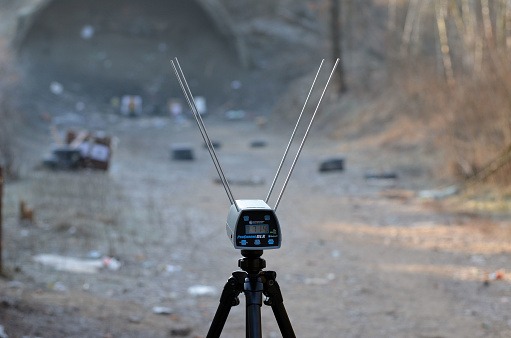
At a chronograph station, officials typically measure multiple shots and calculate the average.
A load that averages under the required number can result in penalties or scoring adjustments depending on the match rules.
Because of this, most competitors aim for 130–132 power factor.
This small buffer protects against unexpected velocity drops.
Temperature Can Change Velocity
Temperature is one of the biggest variables affecting ammunition performance.
Powders often burn differently depending on environmental conditions.
Cold weather can reduce velocity, while hot temperatures may increase it.
For example:
A load that produces 130 PF in summer heat may drop closer to 125 PF in colder conditions.
This is why many competitors chronograph their ammunition across different temperatures when possible.
Building a safety margin helps ensure ammunition remains compliant regardless of match conditions.
Barrel Length Matters
Another variable often overlooked is barrel length.
Velocity changes depending on the firearm used during chronograph testing.
For instance:
A load tested in a 5-inch barrel may produce less velocity in a 4-inch pistol.
If a match official tests your ammunition in a shorter barrel than yours, the recorded velocity could be lower.
Competitive shooters account for this by ensuring their ammunition comfortably exceeds the required power factor.
Consistency Matters More Than Speed
Many shooters assume higher velocity automatically guarantees compliance.
But velocity alone isn’t enough.
Consistency between rounds matters more than raw speed.
Large velocity variations can produce unpredictable power factor results.
Match-grade ammunition is designed to maintain tight velocity spreads so every shot performs similarly.
Low standard deviation (SD) and extreme spread (ES) numbers help ensure reliable power factor performance.
For competitive athletes, consistent ammunition is as important as accurate shooting.
Recoil Impulse Still Matters
While meeting power factor is essential, competitors still aim to minimize recoil.
Lower recoil allows for:
Faster split times
Better sight tracking
Quicker transitions between targets
This is why shooters tune ammunition carefully to meet power factor without exceeding it by too much.
Loads that significantly exceed 135 PF may produce unnecessary recoil and slower stage times.
The ideal competition load balances three factors:
Reliable power factor compliance
Minimal recoil impulse
Consistent velocity
Testing Your Competition Ammo
Serious competitors verify their ammunition before every major match.
Typical testing includes:
Chronograph testing to measure average velocity.
Calculating power factor using real-world data.
Evaluating recoil impulse during rapid-fire drills.
Confirming reliable cycling in the competition firearm.
Testing ammunition from the same batch intended for the match is particularly important, since small production differences can influence performance.
Why Precision Match Ammunition Matters
Generic range ammunition is designed for affordability and high-volume shooting.
Competition ammunition is built with different priorities.
Precision match loads are engineered for:
Consistent velocity
Predictable recoil behavior
Reliable power factor compliance
Repeatable performance under pressure
When ammunition performs consistently, competitors can focus on execution instead of worrying about equipment variables.
Final Thoughts
Tuning ammunition for Minor Power Factor isn’t just about meeting a number.
It’s about balancing performance.
Competitive shooters aim to produce ammunition that:
Safely exceeds power factor requirements
Maintains consistent velocity
Minimizes recoil impulse
Cycles reliably in their firearm
When those elements come together, ammunition becomes a performance tool rather than a variable.
And in high-level competition, removing variables is often what separates good shooters from great ones.