
124gr vs 147gr 9mm: Which Bullet Weight Wins in USPSA Competition?
124gr or 147gr? Learn how bullet weight affects recoil impulse, sight tracking, and power factor in USPSA competition. Discover which 9mm load gives competitive shooters the edge.
David Wilhite
3/26/20263 min read
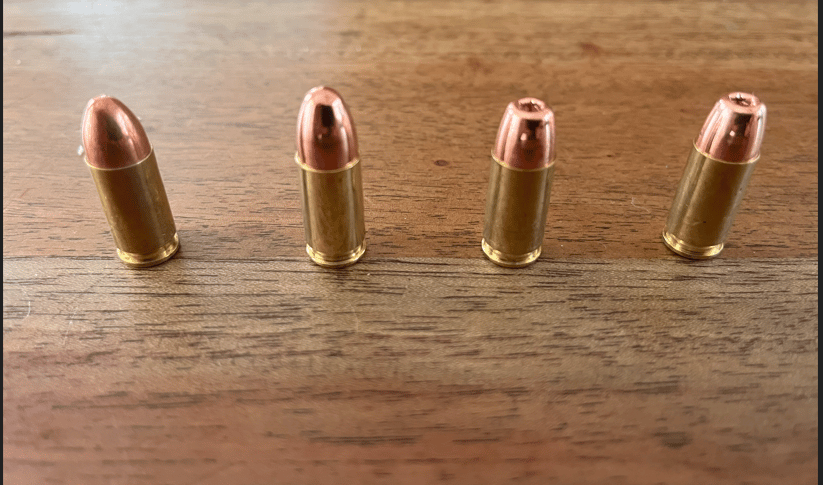
124gr vs 147gr 9mm: Which Bullet Weight Wins in USPSA Competition?
Among competitive pistol shooters, few debates are as persistent as the question of 124-grain vs 147-grain 9mm ammunition.
Both bullet weights dominate the world of action pistol competition, particularly among shooters competing in .
Each offers distinct advantages in recoil impulse, power factor consistency, and sight tracking. The “best” choice ultimately depends on the shooter, the firearm, and the performance characteristics they prioritize.
Understanding the differences between these two popular bullet weights can help competitive athletes choose ammunition that complements their shooting style.
Understanding Minor Power Factor
In USPSA competition, most 9mm shooters compete in Minor Power Factor, which requires a minimum PF of 125.
Power factor is calculated using the formula:
Bullet Weight × Velocity ÷ 1000
Typical competition velocities look like this:
Bullet Weight Approximate Velocity Power Factor
124 grain ~1,050 FPS ~130 PF
147 grain ~880 FPS ~129 PF
Both loads comfortably meet Minor power factor requirements while allowing shooters to tune recoil characteristics.
The key difference isn’t power factor itself — it’s how the gun behaves when the shot breaks.
How Bullet Weight Changes Recoil Feel
Even when two loads produce the same power factor, they can feel dramatically different.
This is because recoil has two important characteristics:
Recoil Energy – the overall force generated by the shot.
Recoil Impulse – how quickly that force is delivered.
Different bullet weights change how recoil is transmitted through the firearm.
124-Grain 9mm: The Balanced Competition Load
The 124-grain bullet is often considered the most versatile option for competitive pistol shooters.
Advantages of 124gr loads include:
Balanced recoil impulse
Reliable cycling across a wide range of pistols
Consistent power factor performance
Widely available match-grade bullets
Many competitors find that 124gr ammunition produces a recoil impulse that is quick but predictable. The gun returns to target rapidly, which can benefit shooters who prefer a faster recoil cycle.
Because of this balance, 124gr bullets are extremely popular among competitors running striker-fired pistols and duty-style platforms.
For shooters seeking consistency without heavily tuning their firearm, 124gr ammunition often performs exceptionally well.
147-Grain 9mm: The Soft-Recoiling Alternative
147-grain bullets behave differently.
Because they travel at lower velocities, they tend to produce a longer, smoother recoil impulse.
Advantages of 147gr loads include:
Softer perceived recoil
Reduced muzzle snap
Smooth sight tracking
Excellent suppressed performance
Many competitive shooters describe the recoil of 147gr ammunition as a “push” rather than a “snap.”
For shooters using red dot optics, this smoother impulse can sometimes make it easier to track the dot throughout the recoil cycle.
However, heavier bullets can also slightly alter slide timing and cycling characteristics depending on the firearm’s recoil spring setup.
Sight Tracking and Competitive Performance
In action pistol competition, sight tracking is everything.
Competitive shooters want to see their sights or optic dot lift and return predictably after every shot.
The right ammunition can make that pattern easier to control.
Some shooters find that:
124gr loads produce a faster recoil cycle
147gr loads produce smoother dot movement
Which one performs better often comes down to personal shooting mechanics and firearm configuration.
High-level competitors frequently test multiple loads to see which produces the most consistent sight picture during rapid fire.
Reliability and Firearm Tuning
Another factor in the 124 vs 147 debate is reliability across different platforms.
Because 124gr ammunition operates at higher velocities, it tends to cycle reliably in a broader range of firearms without modification.
147gr loads, while still reliable, sometimes perform best in pistols that have been tuned with appropriate recoil springs.
Shooters running highly optimized competition pistols may tailor their recoil system around a specific bullet weight.
Consistency between ammunition and firearm setup is critical for reliable stage performance.
Suppressed Performance Considerations
For shooters training with suppressors, 147gr ammunition offers an additional advantage.
Heavier bullets naturally operate at subsonic velocities, which helps eliminate the sonic crack produced by supersonic rounds.
This makes 147gr ammunition a common choice for suppressed shooting applications.
While suppressors are not typically used in USPSA competition, many shooters train with them outside of matches.
Which Bullet Weight Is Better?
The truth is that both bullet weights are highly effective for competition.
Many top shooters perform at elite levels using either option.
The best choice often comes down to:
How the recoil impulse feels in your firearm
How your sights track during rapid fire
Reliability with your recoil spring setup
Personal preference during match conditions
Competitive athletes frequently test multiple loads and evaluate them using chronographs and live-fire drills.
The goal isn’t simply to choose a bullet weight — it’s to find a load that produces predictable performance under pressure.
Precision Match Ammunition Matters
Regardless of bullet weight, the most important factor is consistency.
Competitive shooters rely on ammunition that produces:
Tight velocity spreads
Reliable power factor performance
Predictable recoil behavior
Consistent feeding and cycling
Precision match ammunition is engineered to deliver that level of performance repeatedly.
When ammunition behaves the same way every time, competitors can focus entirely on stage execution.
Final Thoughts
The debate between 124gr and 147gr 9mm ammunition has no universal answer.
Both bullet weights offer advantages for competitive pistol shooters.
Some athletes prefer the quicker recoil cycle of 124gr loads. Others favor the smoother impulse produced by 147gr bullets.
The key is finding the load that allows your firearm to track predictably and your sights to return naturally during rapid fire.
In competitive shooting, consistency is the ultimate advantage.
For athletes who demand repeatable performance under pressure, precision match ammunition becomes an essential part of the system.